AllChinaBuy Spreadsheet Hat Rack
Hat Rack › Spreadsheet
The whole catalogue rack, with the hat hooks hung first
This is the Spreadsheet part of the site: a rack of every category we send readers to, with our own five hooks at the top. The hooks hold our picks; the shelves below lead into the full catalogue, where the choice is far wider and nobody has picked anything for you.
Five hooks of picked hats, knits, frames and chains
Each hook page carries its picks by price tier, a guide to the listing words on that shelf, and what the photos should show before you keep a piece.
 CapsSix-panel, five-panel, trucker and visor shapes.10 picks
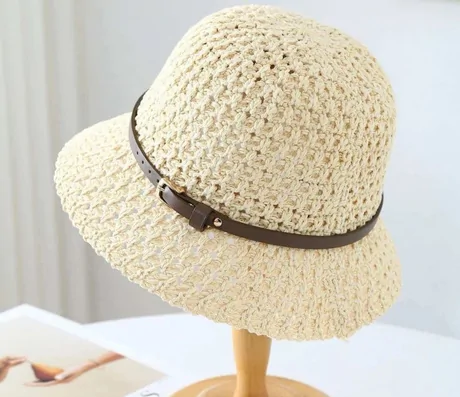
 Bucket hatsStraw, cotton, nylon and wide brims with cords.8 picks
 Beanies and scarvesRib knits, jacquards, hoods and long fringed scarves.15 picks
 EyewearOptical frames and sunglasses with their lens codes.8 picks
 JewelleryChains, studs, bands and a charm bracelet.8 picks
Clothing shelves, read for what sits under a hat
Seven clothing entries, one of them a keyword search rather than a shelf. The line on each tile is what we would check first when the piece has to work with a cap or a beanie.
 Jackets and coatsCollar height matters if a hat or hood will sit against it.
 HoodiesHood depth and drawcords, the two things that clash with a cap brim.
 T-shirtsNeck rib and print placement; a cap and a tee are the most common first pairing.
 JeansWash and leg shape, read from flat shots rather than worn ones.
 SweatpantsCuff or open hem, and whether the waist has a cord.
 Womenswear searchSearch results for a keyword, not a curated shelf; expect everything from coats to caps.
 JerseysCollar style and badge placement on classic football shirts.
Shoes, bags, watches and everything else in the catalogue
Nine more entries cover footwear, carry and the small hard goods. Watches, fragrance and electronics come with shipping limits at most agents, so read the rules before you fall for one.
 SneakersThe busiest shelf in the catalogue; sole and toe-box shots tell you more than the side view.
 BagsStrap length and the inside shot; small bags carry hats and frames well.
 HatsThe whole hat shelf, broader than the hooks we pick from.
 BeltsBuckle finish and strap width.
 EyewearFrames, sunglasses and the cases that come with them.
 PerfumeBottle shots only; check liquid rules before adding one to a parcel.
 JewelleryPendants, rings and studs; scale is the hard part to judge.
 WatchesDial and bracelet in daylight; carrier rules come before the buy.
 ElectronicsCases and boxes in the photos; batteries change what a parcel can carry.
What one catalogue entry can vouch for
So what is the AllChinaBuy Spreadsheet on this site? It is a product catalogue guide rather than a document: categories you browse by picture, product cards that each lead to one listing, and a short set of picks we have already filtered. The name ties it to AllChinaBuy because the agent is where many readers first met these listings; the catalogue itself works with any agent that can buy from the platforms it draws on.
A catalogue entry tells you what the seller photographed, the price the catalogue displayed and the options the listing offered. It does not tell you how the item feels, whether the photographed piece is the one that ships, or what the agent will charge on top. Those answers come later: from the warehouse photos after purchase, and from the agent's own fee page before you pay.
That gap is why every price on this site carries a date and every card carries a note about the photos. A picked card saves you scrolling. It does not replace reading the listing.
Reading one card on this rack, piece by piece
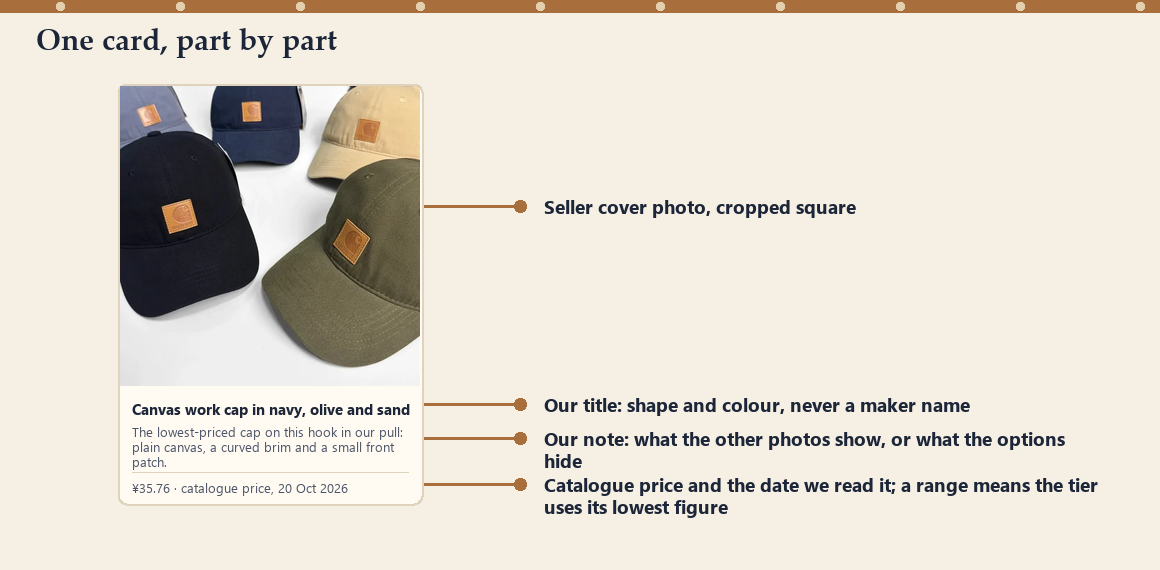
Every card on the hooks follows the same order. The photo is the seller's cover image, cropped square. The title under it is ours, written to describe shape and colour without naming any maker. The note says what the other listing photos show or what to check in the options. The last line gives the catalogue price and the date we read it.
When a listing shows a price range, the card shows the range, and the tier comes from its lowest figure. That matters on scarves and jewellery, where one listing can run from a few yuan to several hundred depending on the option. A card in the lowest tier can still lead to an option that belongs in the highest, so read the option you are buying, not the card.