AllChinaBuy Spreadsheet Hat Rack
Hat Rack › How picks are made
How the picks on this rack are made, and how to make your own
A picked list is only as useful as the method behind it. This page lays out ours, then turns the same questions round so you can judge any Spreadsheet site, seller, agent or listing without us.
A short rack on purpose: why the picks stop at forty-nine
The catalogue holds thousands of accessories; this rack holds forty-nine. That is deliberate. A short list lets every card carry a note written from its photos, a dated price and a tier, and it lets us recheck every link on the day we build. A long list would mean copying seller titles and hoping the links still work.
What we do differently from a raw catalogue: we write our own titles without maker names, we say what the other photos show, we date every price, and we keep the money facts about AllChinaBuy on dated record pages instead of mixing them into product cards. What we do not do: rank items, score them, or claim we have handled them. We have not; we have read their listings.
Dead links are the first sign a list has been left to rot. Ours were checked on 20 October 2026, and the about page records each rebuild.
Signs a Spreadsheet site is still looked after
Knowing how to choose a Spreadsheet site saves more money than any single pick. Start with dates: a useful site says when its prices were read and when its links were checked, and the dates are recent. A site with no dates anywhere is asking you to take it on faith.
Next, read a few card descriptions. If they repeat the seller's title word for word, nobody has looked at the listing. If they name a brand on every card and promise the item matches the original exactly, the site is selling a story, not a catalogue, and no listing photo can back that promise.
Then look for who runs the site, how it makes money and how to reach it. Earning from referrals is ordinary; keeping it quiet is the warning sign. Finally, open three links at random. If one is dead or leads to a different item, expect the rest of the list to have aged the same way.
Sellers behind accessory listings, read from the page
You rarely get to choose a seller on a catalogue card, but the listing page says a lot about the one you are buying from. Good sellers of small accessories show the item from several angles, on a plain background, in daylight, with at least one photo that gives scale. Their option names match the photos, and the codes in a chart match the list.
Warning signs on accessory listings are consistent. Every photo is a collage from a different shop. The cover price belongs to an option that is not the item in the cover photo. The title promises a material the price cannot support. The same image appears under several listings at different prices.
Through an agent you can usually put a question to the seller before buying, such as the crown depth of a hat or the length of a chain. A seller who answers with a measurement and a photo is worth more than one with huge sales figures and no reply.

Judging an agent before the first parcel
How to choose an agent comes down to the same few pages at every agent. Read the fee page and note whether ordinary orders carry a service fee, how shipping is charged and what fixed per-parcel charges exist. Read the storage page for free days and what happens after them. Read the cover or insurance page for rates, payout limits and exclusions, including whether jewellery is covered.
Then check the agent's footing: whether its site names the company that runs it, whether its help pages carry dates, and whether its site is up and taking orders. An agent whose homepage shows only a maintenance notice is not one to send money to, however good its archived pages were. Comparing agents on their published pages, as the AllChinaBuy record page does for four of them, takes half an hour.
A trustworthy agent tells you what it charges before you pay and answers questions about a parcel in writing. Keep those answers.
Choosing the hat, the frame or the chain itself
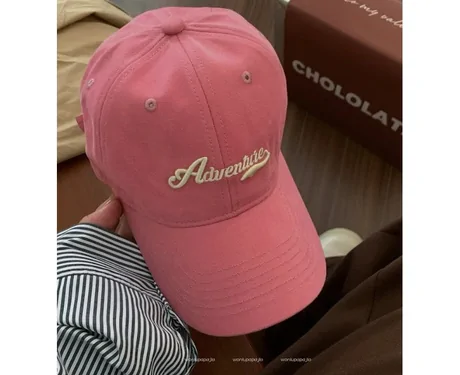
Picking the right item starts with something you already own. Measure a cap that fits you, from the top button to the brim seam and round the inside band, and compare it with any measurement the listing gives. Do the same with glasses: the numbers printed inside the arm of a pair you like are the width, bridge and arm length to look for.
For knits and scarves, decide on length before colour: a scarf you want to wrap twice needs to be long, and a beanie you want to slouch needs extra length at the back. For jewellery, decide on scale from a worn photo, not a close-up.
Then narrow by photos. Keep items with a side view, a worn view and readable options. Skip items whose cover photo is a collage of different products, unless the option list makes clear which one you are buying.
Small-accessory slips: ranges, sets, codes and bulk
Before you order a handful of accessories, watch for the traps peculiar to small items. The first is the price range: a card showing ¥14 may lead to options at ¥300, and the low figure is rarely the piece in the photo. Read the option you are buying, not the headline price.
The second is the set: a listing that shows a hat and scarf together may sell them separately. The third is the colour code: on eyewear and jewellery charts, picking C3 when you meant C5 is the commonest slip, and a return on a low-priced accessory rarely makes sense once shipping is counted.
The fourth is shipping limits. Fragrance and anything with a battery meet carrier rules that differ by agent and route, so an add-on perfume can hold up a whole parcel. The last is volume: ten caps are light but bulky, and a large parcel is charged on its size as well as its weight.

Price tiers and how picks are chosen
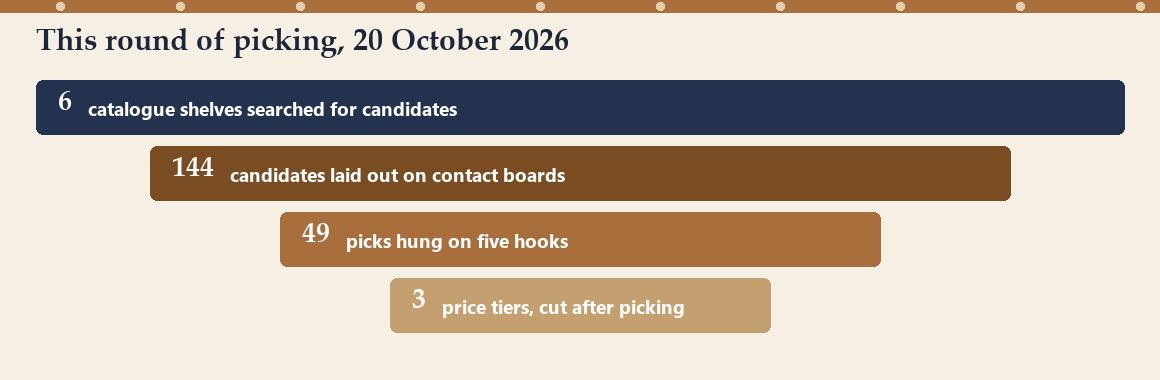
This round ran in one day. On 20 October 2026 we pulled candidate listings from six catalogue shelves through the catalogue's own search, set aside listings already used by other sites in our group, and laid out twenty-four candidates per shelf on contact boards: 144 listings in all. We looked at every cover photo and chose forty-nine.
A candidate was dropped when its photo showed something other than the item, when it was a collage we could not describe honestly, when its photos carried grading words or shop names across the image, or when the hook already had the same shape and colour. Price played no part in the choice. The tiers were cut afterwards from the displayed price, at ¥50 and ¥120, using the lowest figure of any range.
Each pick then got a card: our title, a note on its other photos, the price and the date. If a listing changes, the card stays as it was on the pull date until the next rebuild.